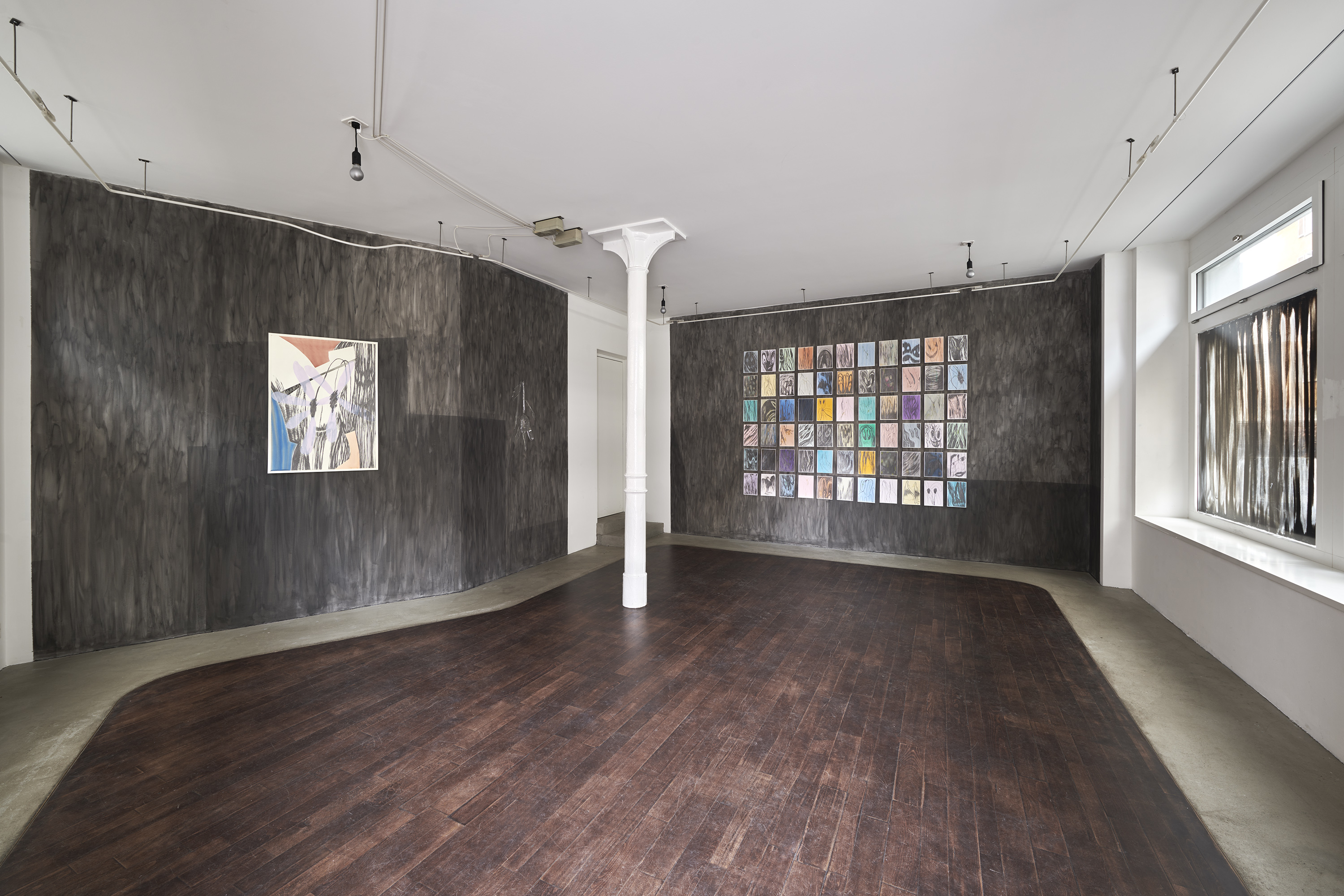
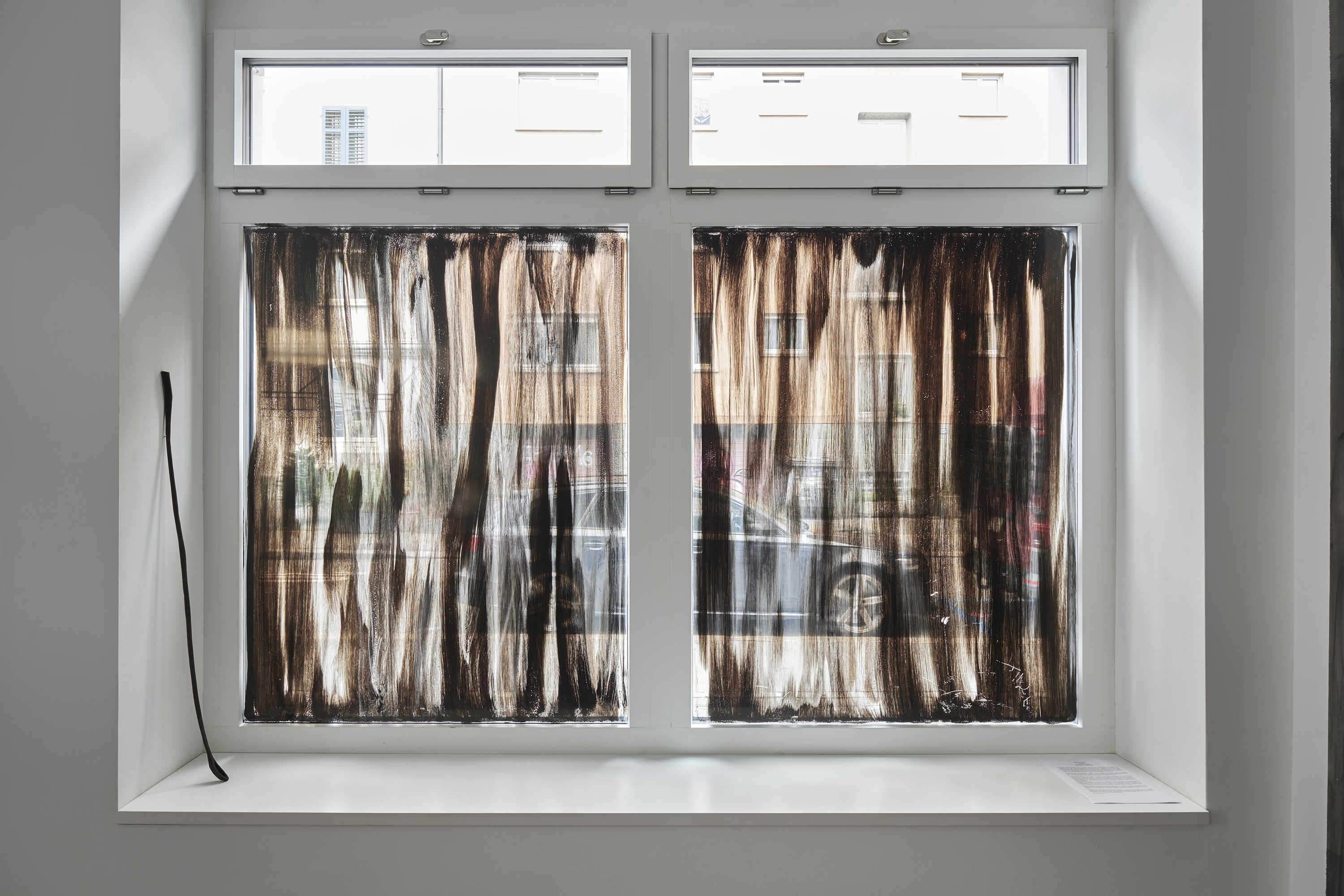
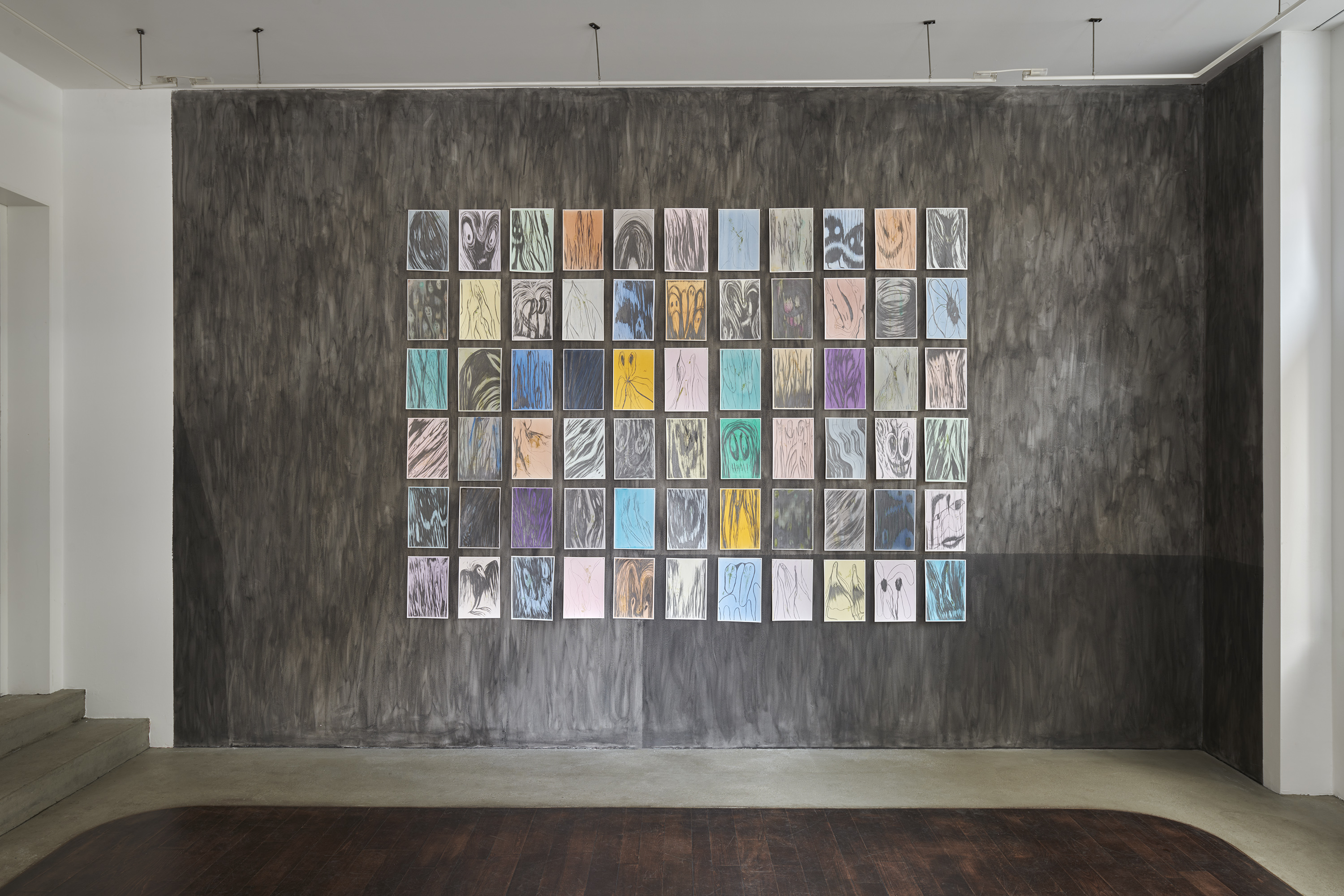
The Martini effect describes an intoxicating state that can arise during deep-sea diving. Increased underwater pressure induces a narcotic response caused by nitrogen in the breathing gas, akin to the disorientation of alcohol. The deeper the dive, the more profoundly consciousness is altered. Translated into Martini units, this means: at 15 meters, the experience corresponds to a martini on an empty stomach; at 30 meters, it equals two. Intoxication, light-headedness, and euphoria cloud perception, while impaired judgement, vertigo, and slowed responsiveness to one’s surroundings begin to take hold.
On land as well, everything is in motion. A world thrown off balance begins to wobble, inducing its own form of vertigo. Apparent points of stability can tilt from one moment to the next; the ground seems to shift beneath one’s feet. A small disturbance expands into wider and wider circles until the pull of the vortex threatens to engulf everything.
In the natural world, the processes of emergence and decay articulate a continual cycle of transformation. Plants, as carriers of memory, establish a link between past and present. Just as Rosa Luxemburg sought to create a counterbalance to a turbulent world through her herbarium, through the collecting and ordering of plants, Eleonora Meier, too, finds stability and orientation in her own engagement with nature.
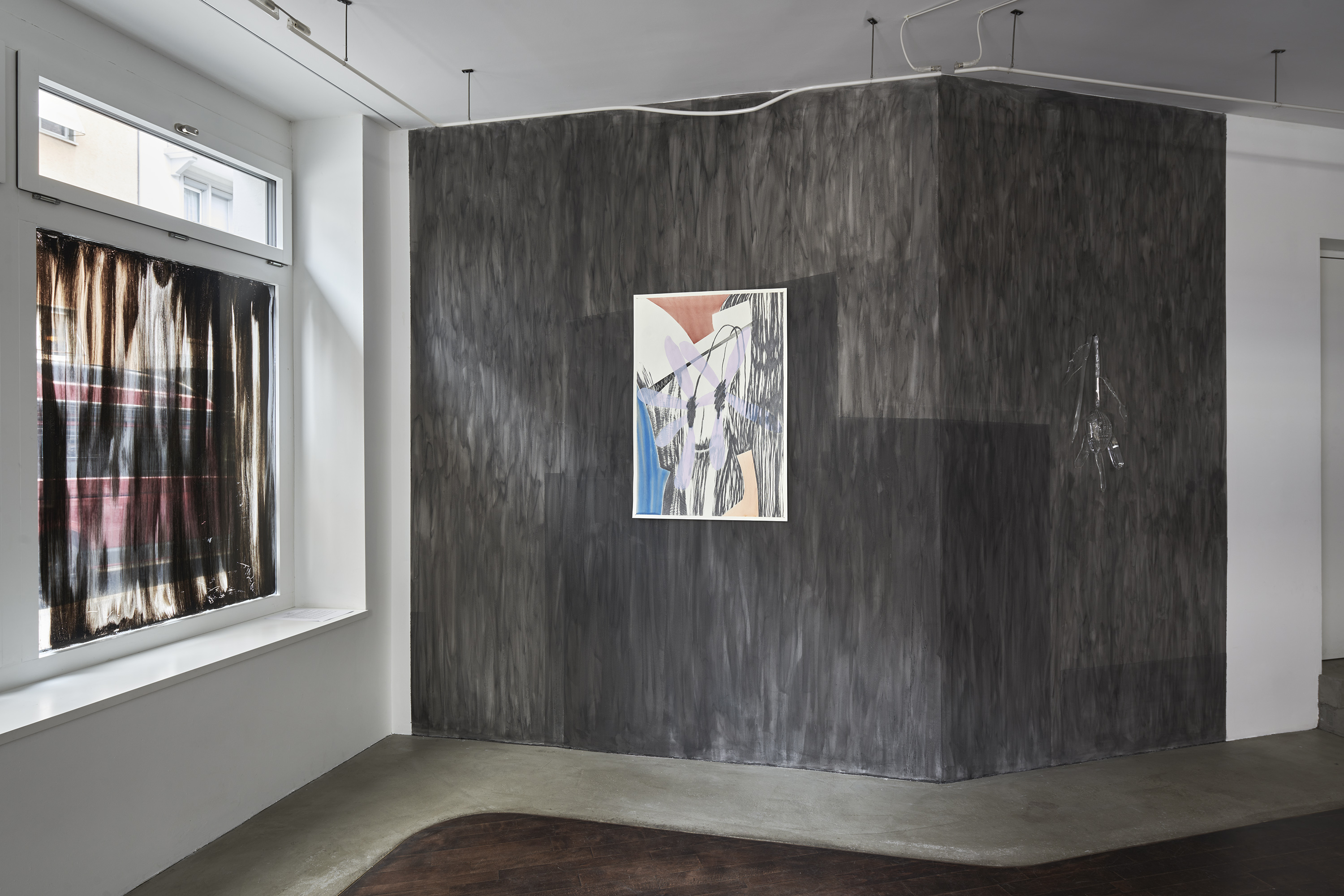
The act of observing, classifying, and preserving becomes more than a scientific gesture: it becomes a way of shaping meaning amid uncertainty. Plant juices seep into the works of the Herbarium series, functioning simultaneously as material and metaphor, testimony to rootedness, to situatedness, to the persistence of organic traces. In this sense, the herbarium becomes a stabilizing gesture: a resistance to disorientation, an act of holding fast, a method of care and of healing. Repetition and continuity operate here as anchors, concentrating attention amid the turbulence of events.
The fluid structures of nature illuminate change as an inherent continuum. Charred wood transforms into charcoal, gaining new potential and sensorial presence; plants dissolve into translucent forms, fragile and permeable. Objects shaped by fire solidify into fixed sculptural states.
Through its meandering visual language, «Vertigo» suspends the delicate equilibrium of our material and conceptual worlds. It foregrounds fractures and resilience as mutually entangled forces within ongoing transformation. For only through the act of shedding, of relinquishing can renewal and change emerge.
Exhibition text by Barbara Ruf